The poet talks to Alexis David about humans, metaphors,
nature, and refusing negativity
One of my best friends really likes learning about celebrities. I like learning about poets. When I read a book of poetry that I really like, the poet takes on a somewhat divine quality. I become haunted by their language; they seem otherworldly to me. Hoping to become a better poet, I often research these god-like poets and try to figure out how they create what they create. This is one of the main reasons I review books of poetry.
And this is how I learn about Cole Swenson.
I had been working on a review of a new translation of Elegies by Emmanuel Hocquard when I first become aware of and intrigued by Cole Swensen. Perhaps I am intrigued simply because the translations are from the French. I travel to France often to see my French in-laws and am in a continual state of learning the language. Or maybe I find the Hocquard review challenging and Swensen’s work is a welcome relief. Or perhaps, it is because I learn that Swensen spends half her time in France. I have always been curious about writers who love France as much as I do. But really, in the end, can any of us explain why we are so captured by something that we want to learn as much about it as we can?
The research takes me to a video of a reading she did for The Griffin Prize, which her book, And And And, was longlisted for in 2024. In the video, she explains that the book is a series of prose poems about poetics and language that often operate on faux logic. Then she reads the first line of the first poem, “Ship”: “A ship,” Swenson begins, “is, by definition, something slipping out of fog, and oddly more visible than a vessel less veiled.” Immediately, I hear the faux logic and it enchants me: specious and mysterious and yet, it rings true. I am reminded of sailing on a lake as a child. As she continues, “More shored in dim windows, it’s more nuance and happenstance, as if more of the story were buried in memory, and thus lit with it and trembling,” I hear the nautical language, the way “shored” calls up an ocean, and I can see this ship churning through the cloudy air. I can almost hear its soothing fog horn. I immediately call my local bookstore and order And And And.
The book arrives in January, three months before my trip to France, in the middle of a cold Buffalo, New York winter. I find myself reading “Ship” over and over, delighted by the poetic journey embedded in this poem, and the sound quality of “a vessel less veiled,” whimsical and enjoyable. It’s a pleasure to read this poem out loud, which I do, alone in my office as the snow falls down:
… A ship is, in fact, the shape of memory itself, and,
remembering itself, suddenly thinks what a long way off it
seems, and yet at every slight lightening of the fog, it deflects
the thought and thus is still coming toward.
The fog extends into linguistics, making it difficult to say
whether it’s a ship or a boat or a ferry or a yacht—
the ambiguity embeds, even enshrouds, and the woman in the
foreground shifts her shawl, thinking that all we are is largely
veiled, though it may be more apparent in seaports, where the
mist lifts the seawall that she’s sitting on—which turns out to
be a ferry after all, and already underway.
There both cozy and intellectual about Swensen’s work. I find myself thinking of a cappuccino.
When I contact Poetry International about publishing my review of Swensen’s translation of Hocquard, the editor quickly picks up on my enthusiasm for Swensen’s work and suggests I do an interview instead. My stomach drops. I’m not qualified to interview Cole Swensen. I have crippling anxiety and a bad case of imposter syndrome. I like reviewing books because it’s quiet, solitary work.
Swensen is in an entirely different poetic world than I am. I am me; she is her. Would she find my questions naïve or banal or just kind of boring? But, bracing myself with the knowledge that the writing journey I’m on is filled with many teachable moments, I email the publicist at New York Review Books (the publisher of her Hocquard translation) and ask if there is a way to contact Swensen for an interview. When I don’t hear back, I’m relieved. Swensen retired from teaching at Brown. She’s probably done with interviews. She’s probably just writing in a notebook in the Jardin du Luxembourg and wants people like me to leave her alone. I tell Poetry International that I can’t find Cole Swensen. But, immediately I am proven wrong. Right when I get off the phone, I find an enthusiastic email from the NYRB publicist: “Yes!” she writes and gives me Swensen’s email.
Still, as wrong as I know I am, I can’t bring myself to email Cole Swensen right away. Maybe I’m just stalling, maybe I truly do need to read more, learn more before I can do a decent interview. So, instead, I request her newest book, Veer from Alice James Books and then set off to France.
When I’m sick of speaking choppy French in a little town called Saint Jean-D’Arves, I read And And And. On the patio of our chalet that overlooks the French Alps, I have a glass of wine and read, “Dust:
The importance of dust cannot be discounted. At first glance,
it seems light–it seems, in fact, the very principle of lightness,
which it is, of course, but it’s also just that sort of lightness
that, while unsettling, nonetheless settles. It’s a precipitate,
and that’s where it intersects with language–language being
those inklings just heavy enough, those that, out of the entire
world of thought, can’t quite remain aloft, and so they come to
settle over everything until they slightly, though not entirely,
obscure it.
I let myself be taken with the idea of language as a lightweight material, something like dust that settles down out of our worlds of thought and onto everything around us. And it is at that moment that I witness an avalanche in the mountains, thankfully uninhabited, across the valley from our chalet. I think about how snow, like language, is also seemingly lightweight. As we watch the snow collapse across the mountains from us, my French family and I exclaim, “C’est sublime.” The avalanche feels emblematic of my experience with Swensen’s work: the words, seemingly lightweight, gather together, then suddenly rupture as a more gigantic thought down a mountain. Swensen’s poems have made me more in love with poetry, more in love with the malleability, playfulness, and possibilities of language.
When I arrive home from France, it is late spring and Swensen’s book Veer has come in the mail. I read it slowly in the chilly spring mornings with cups of tea. Each poem begins with a word, often a noun or a few nouns. The book is divided into three sections: “Tic, Tac, Tao.” This structure showcases the book’s playfulness.
It is a Wednesday at 5pm when I finally email Cole Swensen. My anxiety often lessens later in the day, after an afternoon run. It’s time. I have done enough research. I have discovered, for example, in a Huffington Post interview (with Loren Kleinman), that she picks books to translate because she wants to read them deeply and because “They’re also books that I want to write, and by that I don’t mean that they’re books that I wish I’d written, but literally books I want to write because, of course, if I translate them, I also write them.” In this interview, she speaks about metaphor being a lazy practice:
It’s the gap that’s important in both ekphrastic poetry and translation, and the challenge is to bring the reader to the reality of incommensurability. It’s linked to the mental habit of metaphor–our compulsive, lazy, but comforting habit of seeing one thing as another. The gap highlighted by translation and ekphrasis forces us to acknowledge the false ground of metaphorical thinking. It’s the gap that gives the sense of vertigo, of being suspended over a void in which we recognize a crucial physical truth that defies logic and is yet nevertheless insistent.
In my MFA, I did my final thesis on metaphor theory. Here was my chance to talk to an academic and a poet about metaphor, poetry, and language. What once was panic is now curiosity. Still, to get around my anxiety about interviewing her over zoom, I ask for a written interview. Cole Swensen replies six hours later, at midnight my time. In the morning, I open my email to find her sunny message:
What a lovely and amazing coincidence! Literally, just an hour ago, I read your review of Elegies [in the literary journal, North of Oxford]—I’m giving a talk on Hocquard and translation this Saturday in San Francisco and will be reading from the Elegies, so I was googling around to check on any commentaries, and found yours—thank you so much for writing on the book!
This is astounding. Cole Swensen was reading my review. Cole Swensen knew who I was. C’est impossible! And even more astonishingly, I mention to Cole that I travel to France twice a year and, in the next email, Cole suggests that, if I were ever passing through, we could meet in Paris. Quelle chance! I picture myself having a conversation in the Jardins with pear and apple trees gently blossoming beside us.
And so began my exchange with Cole Swensen, who is smart, funny, and delightful. We talk about sonorous landscapes, language as an absence, metaphor, and the definition of nature, among other subjects. Below is an edited version of my email exchange with her from June 24 to July 16, 2026.
Alexis David: As I was reading Elegies, I was also reading your book And And And. I was struck by your attention to language. The book felt like this wonderful dictionary and it made me interested in many aspects of the translation process. I read that the word “translation” comes from the idea of ferrying across or carrying across. I wondered if translation has to do with carrying an idea between one known shore to one unknown shore, thinking about context and sound quality and as you said in an interview, its “sonorous landscape.” Could you talk about this process?
Cole Swenson: The word translation does come from the idea of carrying something from one place to the other. It comes from the Latin translatio—trans meaning across or beyond, and latio being the past participle of the verb ferro, to carry or to bring. So that may be where the idea of ferrying comes in. One instance in which the word is still used to mean carrying over is in “the translation of the relics of a saint”—when a saint’s relics are moved from one site to another, they are said to be translated. Which, of course, underscores the obvious—that poems are holy things and that literary translation is a stately procession accompanied by ancient music, etc. I like your suggestion that the poem goes from a known shore to an unknown one—as if the shore of its arrival was still under construction, as if the act of translation was constructing it, for while the arrival language does, of course, pre-exist the translation, the actual spot in that language doesn’t until the translation establishes it. And as you say, the sonorous landscape, as well as the fields of association and connotation, are just as important as the semantic meaning. You have to recapture all three—and in the proper balance.
AD: In And And And you have a line, in your poem, “Connote,” which reads, “Language, at heart, is always an absence.” I find this really interesting. It feels like you are hinting at the negative space of language–how words point not only to what is there but also what isn’t there. How do you learn all of the connotations of French words? How does this affect your translation?
CS: I’m thinking of “language as absence” in the Derridean sense, which considers that every signified becomes, itself, a signifier in an endless chain of deferral, as well as in the Wittgensteinian sense, which considers a precise definition of a word impossible because definition is always dependent upon all aspects of the context of every individual use. Learning the connotations of words in a language not your native one is a considerable undertaking, particularly as connotations aren’t something you can learn in the normal sense because they can’t be pinned down—you have to absorb them through attention to the ways a given word is used—which brings us back to Wittgenstein. Translating has made me aware of how huge every word is—endless, really—because its connotative fields are unlimited.
AD: Continuing with this idea, I am so curious about your feelings about metaphor from both a translation and poetic perspective. To me, metaphor, coming from the Greek metaphora, has a similar feeling to translation, of carrying one idea over to another, but in your HuffPost interview (see excerpt below) you talk about the habit of metaphor as being lazy or as a false ground. Could you talk about this in relation to both the act of translation and the act of writing poetry?
And I think it’s not a matter of bridging the gap, but of presenting it. It’s the gap that’s important in both ekphrastic poetry and translation, and the challenge is to bring the reader to the reality of incommensurability. It’s linked to the mental habit of metaphor—our compulsive, lazy, but comforting habit of seeing one thing as another. The gap highlighted by translation and ekphrasis forces us to acknowledge the false ground of metaphorical thinking. It’s the gap that gives the sense of vertigo, of being suspended over a void in which we recognize a crucial physical truth that defies logic and is yet nevertheless insistent.
CS: This is such a great question, coming after the one above! In its earliest uses, metaphor meant just what translation did—a carrying over—but in Greek rather than in Latin. It comes from the Greek verb metapherein, which breaks down to meta—over or across—and pherein—to carry or to bear. And yet, the two words have grown quite far apart after so many centuries and languages. A metaphor, as English speakers use the word today, implies that one thing can be seen as equivalent to another, can stand in for another. When I accuse metaphorical thinking of being lazy, I mean that often it’s easier to grasp a new concept, situation, or item by seeing it in terms of something already familiar, which saves us the greater effort of experiencing the new with the concentration, attention, etc., necessary to fully grasp it in its own right. Such metaphorical thinking is also necessarily reductive; we have to ignore the aspects of the new and of the old that don’t exactly match, denying both poles of the metaphor their particularities and sovereignty.
AD: Now, I’d like to turn to Veer; I loved how so many of your poems are about natural elements, or even natural objects. I’m thinking about the poem, “And What’s Behind” where you mention humans planting trees in lines. It made me think of how humans try to control natural elements, but it also made me curious about the general question: what is nature? What is your definition of nature and how might that definition influence your view of the natural world?
CS: That is such a great question—a huge and important one. In a nutshell, I think that nature is a useless word because there is nothing that is not nature, nothing that is not natural. I find distinctions such as nature vs culture and the natural world vs the human-built environment not only misleading, but potentially dangerous. The words nature and natural distract us from the fact that it’s perfectly natural for humans to invent, and, unfortunately, it’s natural that we invent things such as plastics, gunpowder, and pesticides, all of which are—as is everything—made from the things of this world. The word nature conceptually constructs a category of other over there somewhere, regarded either vaguely and dismissively or romantically and idealistically. Both are equally destructive because they prevent our recognizing the interconnected and interdependent network of all things, and when we don’t recognize that, we often don’t recognize the full extent of our responsibilities to that network either.
AD: There were a few times, in Veer, that I wondered about the narrative perspective, if poems do have narrative perspective (the speaker?) and how this perspective in the poem almost seemed like a human that an animal was viewing, rather than the interior monologue of a human. I noticed it in “While Sun Pouring In” (the hand) and also in “Fog” (the figure in the park). It felt like these were humans viewed from an outside, rather than interior, source, as if humans were truly a part of nature.
CS: As I said above, absolutely! Humans are completely natural, which makes them a part of nature—they just happen to be a particularly destructive part. But I love your sense that the observer or speaker in many of the poems is not a human. I very much wanted an exterior perspective, a perspective not influenced or determined by my own experiences and predilections—which is, of course, impossible, but perhaps the attempt alone gives the poems a kind of twist. I like to think of any observation, commentary, etc. as beginning outside my body and moving farther outward from there.
AD: Most of your poems have very delightful endings that are both matter-of-fact and offer some levity. This quality gave my reading experience a sense of magical realism. Do you think about magical realism when writing these poems?
CS: I think of it more in terms of absurdism—things that are ridiculous, even silly, and there’s often a lightness to that. It seems to me that one of poetry’s roles is to show the world in an unexpected light. The Russian Formalist Viktor Shklovsky, in a 1917 essay titled Art as Technique, introduced the concept of ostranenie, or defamiliarization, which claimed that art, including poetry, can present the things of this world in a novel light that allows people to see them as if for the first time, with the shock of a first encounter. I think absurdism can have a related effect—when you’re asked to entertain a ridiculous idea, you can’t help but think what a diculous one might be, or, asked to consider the outrageous, you find yourself searching out the rageous. So, ok, I’m just being silly, but I’m interested in that, in thinking just slightly over the boundary of the thinkable. I’m also interested in making outrageous statements, statements that no one could possibly believe, with the conviction that such statements may, nonetheless, slightly enlarge the territory of what might be believed. On another note, an element of the levity you note is a kind of defiant optimism. I’m determined to remain defiantly optimistic in the face of our currently seemingly hopeless situation.
AD: My last question is simply about your writing process. Did your process of writing poems change for And And And and Veer? I think I love your writing because I admire your relationship to language (both English and French), how it feels like you are playing with language. Is play part of this process?
CS: First, yes, I am always playing with language; it seems to me that poetry’s first mandate is to stretch language, to keep linguistic structures healthy by keeping them flexible and expanding. And second, yes, I think, perhaps not my process, but my approach changed with these latest two books. I’ve always mostly written with my ear; I follow sound, and the sound triggers ideas, associations, and directions. I’m still writing with my ear, but I’ve been hearing differently, in longer rhythms and more coherent phrases. I’m using much less fragmentation, juxtaposition, and other disruptive structures now than I did in much of my earlier work, and I’m moving more toward smoother cohesion, which is perhaps just a response to the increasingly disruptive forces—from climate change to constant war—that surround us while remaining beyond our powers of intervention. The more the world at large becomes negatively disrupted and disruptive, the more I tend toward works and forms that hold together and refuse that negativity with an insistent, even if illogical, positivity. That is the root and reason behind the absurdity at the base of my work in these two latest books and in the work I’ve been doing since their publications.
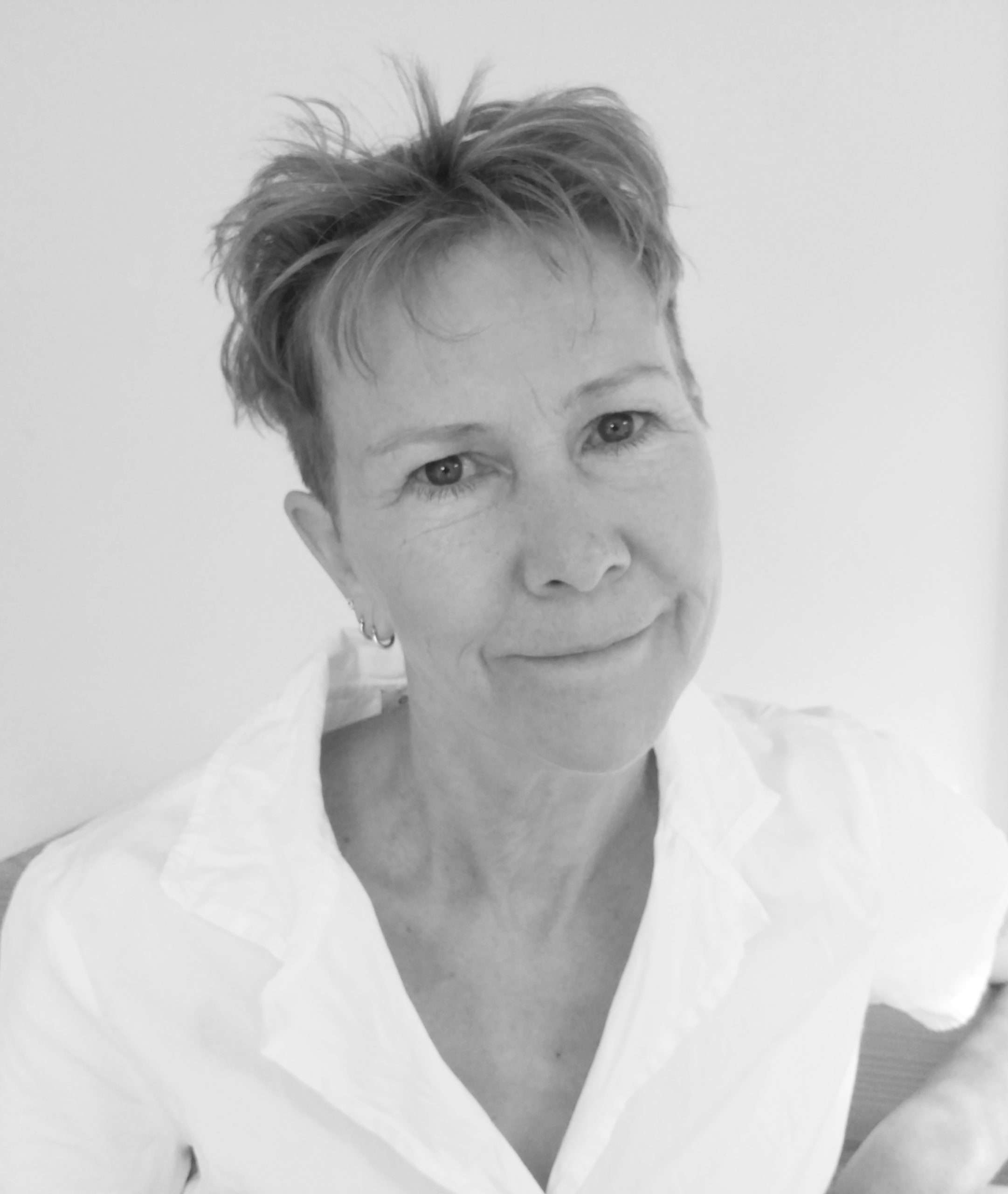
Cole Swensen is the author of twenty volumes of poetry, most recently Veer (Alice James, 2026). She has been awarded the Iowa Poetry Prize, the SF State Poetry Center Book Award, and the 2025 Paul Engle Prize. Also a translator, she won the 2024 ALTA National Translation Award and the 2025 Stephen Mitchell Prize. She divides her time between France and California.