
Linda Gregerson and
the Poem as an Instrument for Inquiry
Blas Falconer talks to the poet about poetic form, the limits of language,
and writing in a world marked by suffering
After reading Linda Gregerson’s poems featured in this issue of Poetry International Online, I wanted to understand more about their origins and the larger conversation they seemed to be having with one another. Their lyric power, immediacy, and tautness drew me into someone else’s story, only for me to recognize it as my own, and everyone’s.
Moving between the intimate and the global, these poems confront the brutality of the world and ask how we might reckon with its suffering, what we hold close, and where we might still find tenderness and wonder. They offer no easy consolations but remind me why we need poetry: not to resolve the world’s contradictions, but to help us remain attentive to one another and to what is still possible.
In the conversation that follows, Gregerson reflects on the voices, formal choices, and questions that shape these poems—and on the difficult work of sustaining hope amid suffering.
Blas Falconer: We’re thrilled to be publishing these new poems, Linda. They speak to one another in so many interesting ways, and I found myself reading them not only as individual works but as parts of a larger conversation. Are they part of a larger project? If so, can you tell us about it and how it began for you?
Linda Gregerson: They are all part of my new book, as yet untitled, and I’m very glad you find that they speak to one another. I do not write “project” books, or have not done so to date, but I always hope there will be an underlying coherence to be found among even the most disparate individual poems. Like most of the people I know, I find myself wild with grief and anger when I read the morning news these days: the spectacles of suffering all around us are all but overwhelming. And our responsibility for that suffering – our responsibility as Americans, as a generational cohort (I was born in 1950), and as fellow human beings – is an open wound. This perforce finds its way into the poems. That said, I am determined to preserve a space for hope and for the action, feeble as it sometimes seems, that hope entails. It’s the least we owe to those who come after us.
Writing itself is an act of faith, I believe. Faith that following-the-question can lead to better understanding. Faith in the consolations of form. Faith that there is something more than chaos in the world.
BF: Language can so often feel inadequate in the face of war, but these poems confront violence in ways that feel both intimate as well as historical. Can you talk about some of the formal choices you made in approaching the subject?
LG: I have no right to write about war directly. I have (so far) been spared. But I live in the world, and the world in which I live is plagued by wars on every side.
Formal choices? The key one, I suppose, is distribution among different voices and differing points of view. Hence the sections in a poem like “Transit,” each of them a fragment. And I try to acknowledge my points of access: a mother’s desperate effort to constitute stability for a tormented child; a Bosnian friend in London who survived the siege of Sarajevo.
The fourth section of “Transit” may seem anomalous, and it took me some time to find my way to it. I simply knew I couldn’t end the poem with section three: too pat. My daughter has for years been part of a canine search and rescue team and is now responsible for training FEMA dogs as well. Dwelling as the poem does on scenes of disaster and aftermath and searching for something besides despair, it made sense, emotional sense, to summon these blessed dogs.
The choice in “Village” I might point to – and it too was an emotional choice as well as a musical one – is the inclusion of a line from King Lear. All of us have a certain amount of language stuck in our heads — bits from the bible, from a favorite song, from a homiletic formula– that surface unbidden when we least expect them. In this case, it was a fragment of Shakespeare: “O reason not the need: our basest beggars / Are in the poorest thing superfluous.” The context – a king’s vain bartering for the retention of extravagant privilege – is on the surface grotesquely inapt, but that’s often the way with these unbidden visitations. And as Shakespeare has taught us over and over again, even the blindest character may speak a line that cracks the fictional surface with a flash of moral awakening. I have never purposefully set out in search of a line from Shakespeare, or Milton, or Eilzabeth Bishop, or anyone else, to bolster a poem – the very thought makes me recoil. But they will come of their own sometimes, and sometimes I keep them.
BF: I was so moved by “YOU, EUMAEUS.” He’s such a fascinating figure in The Odyssey. What drew you to this marginal character, and to addressing him directly? How does he inform the way we understand the larger themes in these poems?
LG: I too have always imagined the swineherd to be, if not a marginal character, then a minor one. But when I reread The Odyssey last summer (in English, alas; I have no Greek), I was stunned to discover the poet addressing Eumaeus in the second person. Repeatedly. Why had I never noticed this before? No other character in The Odyssey is treated this way – almost as an intimate interlocutor. Scholarship has found no explanation for why this should be so, or so I have been told by people who know far better than I. So my only recourse was to ask about it in a poem.
As to larger themes, well, I suppose the sheer dignified faithfulness to daily labor, which Eumaeus models beyond all other figures in Homer’s poem (he chooses to sleep with the pigs, the better to watch over them) might be a lesson for us all in a world so torn by strife and vengefulness. When Eumaeus is invited to tell the story of his early life, we learn that he was born a prince, abducted by a treacherous subordinate, and sold into slavery. He might easily be consumed by bitterness and aggrievement, but that is not the path he has chosen. Contrast that with ten years of slaughter in the cause of an insulted husband and his absconded wife.
BF: I’m fascinated by the way that “Transit” moves from a harrowing personal account into broader references of violence and war. It’s a lyric poem, but it expands to accommodate multiple people and voices: fragments of dialogue, overheard speech, and tonal interruptions. How do additional voices alter the lyric space? What do they make possible in this poem and in the others published here?
LG: Thank you for this question, which touches on an issue very important to me. I have always wanted my poems to be open to other voices. A porous lyric space. I don’t wish to occlude or deny that specific aptitude of lyric: its grounding in the personal voice. But I do want to imagine, or rather, to work within, a larger world. The poem, for me, is an instrument for inquiry. And thinking, insofar as I am able to do such a thing, has always been for me a multifaceted process: proceeding by way of abutment, analogy, overlapping planes. I simply don’t have the talent for the unilinear.
BF: In “Village,” the poem closes with a long question that delays resolution until that devastating final refusal:
If
an eighty-year-old woman who has lost her sons
and does not know
her one remaining sister is alive albeit
injured in the one remaining clinic still
unbombed within a hundred miles, if she’s con-
vinced, though you and I have never had to
think so, that her future depends on a boxful of
tangled hangers for the clothes
she doesn’t have, then who among us
in this spinning world can tell her otherwise?
Not the gods. Not their pitiful thunder.
Can you talk about how syntax and lineation work together here? I’m especially interested in how the sentence’s delayed unfolding (and that final movement into negation) magnifies the emotional force of the poem.
LG: Syntax! My favorite subject. To me, it constitutes the primary musical and conceptual resource of poetry. Negotiating, as in poetry it always must, the lovely thicket of meter and alliteration, alternately resisting and deferring to the divisions of poetic line. Syntax, in languages like English, where the paucity of grammatical inflection means that sequencing – distribution in time and space – is the key to understanding. The delayed unfolding you ask about bespeaks, I think, my own struggle to represent the workings of a mind under pressure, a mind so shattered by trauma that it has seized on seemingly irrational necessities. I needed the expository details (the sons, the clinic, the one remaining sister) to emerge in subordination to the woman’s desperate focus on salvaged possessions: grammatical subordination stands for something more foundational. Emotion: I was trying at some level to get inside it; I took that dependent clause as far as I could take it without knowing where it would land, what I could possibly propose as a main clause, much less what I was going to do in response to the question I was tracking. I had to feel my way by not knowing.
BF: In all five poems, you make use of the poetic sequence. One especially striking example is “Duck,” which moves from two birds mating on the road to a question about sexual assault during war to myths in which woman are “saved” because they’ve been turned into a flower, a tree, or a river before a man or god can catch them. What does the sequence form make possible for you here, and in these poems more broadly?
LG: Have you ever seen wild ducks mating? It’s a disturbing spectacle. Avian biologists refer to it as “forced copulation,” “antagonistic” or “chaseaway” selection, which has manifested in the very morphology of vagina and penis. (See the Journal of Avian Biology, May 2022, for an article on this astonishing “co-evolutionary arms race.”) Nature will always outdo a poem.
I knew none of this when I came upon those ducks in the middle of the road, but whatever the practice means to the ducks, the spectacle was shocking to me: I can only see through human eyes. What may be “natural,” or excusable, in ordinary analogical thought, however — the all-too-obvious anthropomorphic move – can be deadly in a poem. So this became another moment when I had to go forward by going elsewhere. I was stymied.
Months later, I happened to hear a podcast about the increasing use of AI in warfare, which gave me another angle on the problem of trying to think outside the human. The podcasters wondered if AI might at least eliminate rape as a weapon of war, and hence section two of the poem: “No wonder / we turn to trees and rock.” That sentence was the original ending, which I hoped might be the end of the poem. But then, as is so often the case, the cold cruel light of day said no: the poem still wasn’t finished.
Months later yet, I looked again at that sentence: “turn to.” I’d intended the phrase to signal a turning of attention, an effort to contemplate something genuinely outside the realm of human culpability. But what, I finally thought, if I took the turning literally? What if I thought about metamorphosis? Which is when I disrupted my “final” sentence with a stanza break and turned back (that word again!) to Ovid.
BF: The last poem, “And Still,” ends with the breathtaking image of a baby whose face, seeing the shining world around her, opens like a flower. It doesn’t erase the suffering we’ve witnessed, but I found myself reading that image as a way to move forward. Am I reading the five poems too collectively, or does that final image gesture toward something they have been moving toward?
LG: I’m happy, and grateful, you’ve been willing to read the poems collectively; I thought a lot about sequencing (that other kind of syntax) before I sent them to you. I’ve tried my best to bring that enchanted and enchanting infant face into the poem much as the child came into my field of vision while I was breakfasting alone in a foreign city. She was a vision of pure delight, which came to me as a bolt of joy. Unearned, unconnected to reason or wider perspectives, unconnected to any coherent argument for summoning hope or moving forward. And yet, somehow, itself an argument. Pure joy.
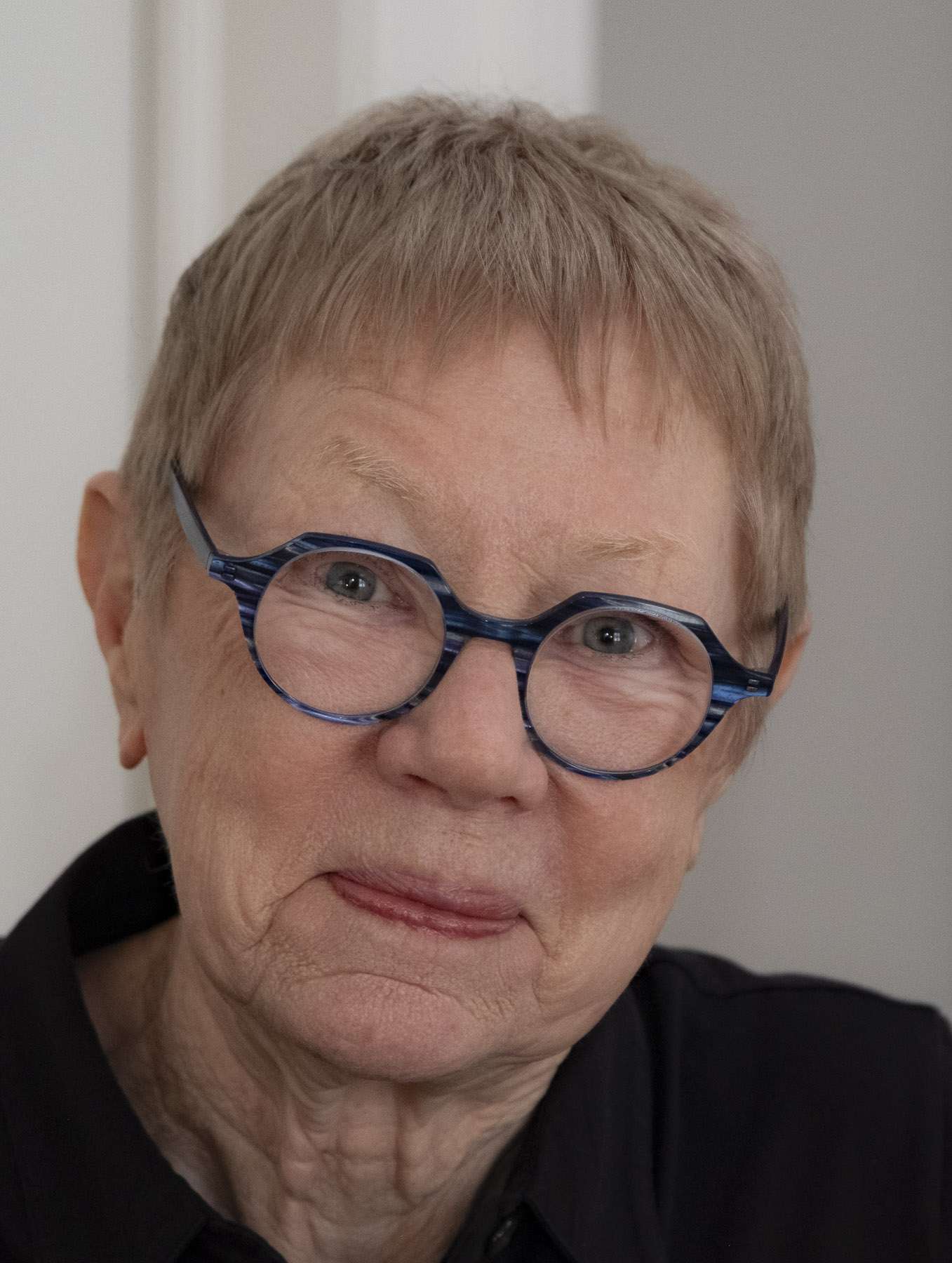
Linda Gregerson’s seventh book of poetry, Canopy, was published by Ecco/HarperCollins in 2022. New essays are forthcoming in Oxford Handbook of George Herbert and Anne Bradstreet Today (Cambridge UP).
Photo Credit: Richard Miller
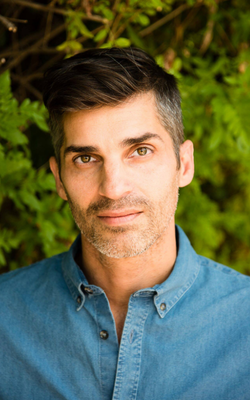
Blas Falconer is the author of four poetry collections, including Rara Avis (2024), and a co-editor of two essay collections, The Other Latin@: Writing Against a Singular Identity and Mentor and Muse: Essays from Poets to Poets. His poems have been featured by Poetry, Harvard Review, and The New York Times, and his awards include fellowships from the National Endowment for the Arts, the California Arts Council, and Poets and Writers. He teaches in the MFA program at San Diego State University.