
Donkeyby Gerald SternHow God in three religions rode on his backand one there was a festival and one hedragged his...
Gerald Stern
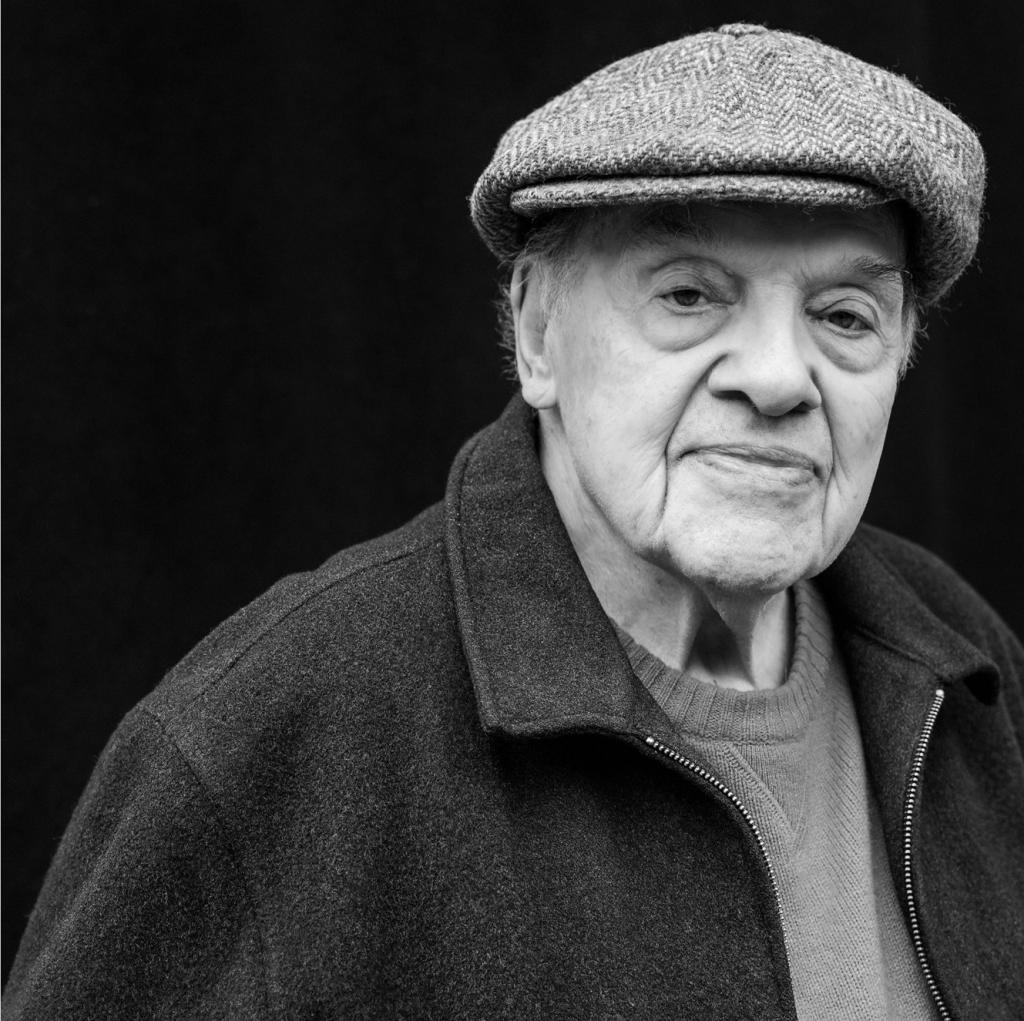
Gerald Stern (1925-2022) is an American master. Born in Pittsburgh, Pennsylvania, in 1925, Stern himself had no mentors. He grew up in a home without books, a child of immigrant parents, and studied philosophy and political science in college. His first book was published in his 48th year, earning him instant critical acclaim. “I thought you read poetry,” he says, “and, like a spider, you did it from the threads of your own belly. So it made me wait for a long time before I got some success. Decades. But at the same time, it made my poetry, whatever came, me.” When he burst on the scene in the early seventies, The Chicago Tribune Book World anointed Stern “the most startling and tender poet to emerge in America in a decade.” From the start, his poems reflected a deep connection to the natural world and to places and things abandoned. Stanley Kunitz once told him, “You are the wilderness in American poetry.”
As William Matthews wrote, Stern is “a poet of ferocious heart and rasping sweetness.” By now, he has written eighteen books of poetry that ponder the weight of history and the buoyancy of memory, the casual miracles of relationships, and the endless possibilities for joy. They include Lucky Life, the 1977 Academy of American Poets Lamont Poetry Selection, This Time: New and Selected Poems, winner of the 1998 National Book Award, American Sonnets, short-listed for the International Griffin Poetry Prize and, most recently, Divine Nothingness. Like Walt Whitman’s, his work—a transformative celebration of the stuff of daily existence—is as gritty, lush, rageful, sticky, hilarious, and humbling as life itself. Stern is also the author of four works of prose, What I Can’t Bear Losing: Notes from a Life, Selected Essays, Stealing History, and, forthcoming in 2017, Death Watch. At 91, rather than slowing down, he’s speeding up. As The San Francisco Chronicle put it, Stern’s work “crackles with his exuberance, impatience and apparently consuming need to get his stories down.”
Stern’s many accolades include a Guggenheim fellowship, a PEN award, the Paterson Prize, four National Endowment for the Arts Fellowships, the Wallace Stevens Award, a fellowship from the Academy of Arts and Letters, and the Ruth Lilly Prize for lifetime achievement. In addition to many years on the faculty at the University of Iowa Writers’ Workshop, Stern has taught at Columbia University, New York University, Sarah Lawrence College, and the University of Pittsburgh. He served as the first Poet Laureate of New Jersey, Chancellor of the Academy of American Poets, and, in recent years, as Distinguished Poet in Residence for the Drew University MFA in Poetry and Poetry in Translation.